

Moving Supplies List: Everything You Need for a Safe and Organized Move
A good move does not start with the truck. It starts with the right supplies.
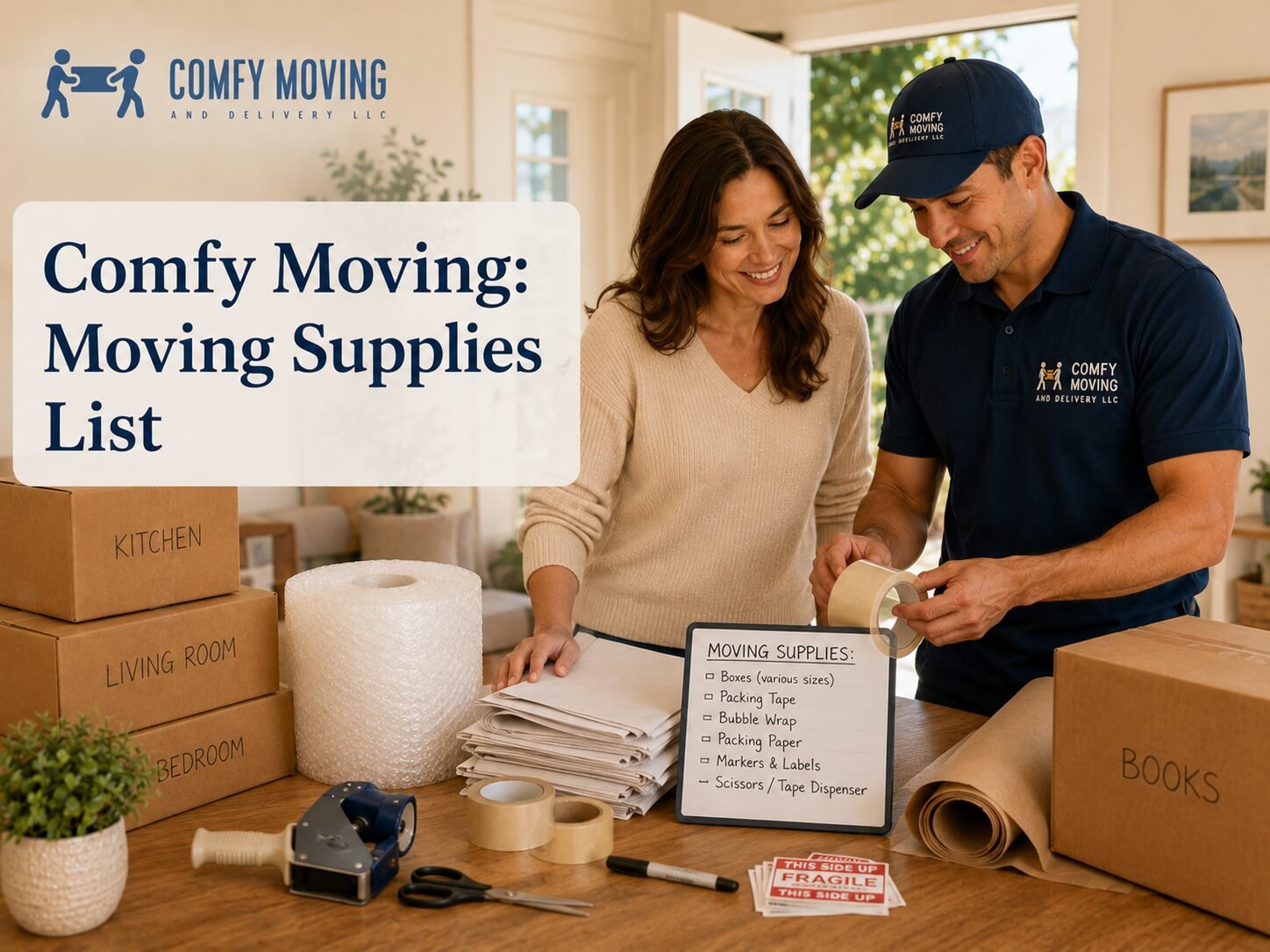
Boxes that are too weak collapse. Tape that barely sticks peels open in the hallway. A lamp wrapped in one thin towel somehow becomes everyone’s problem at 8 a.m. on moving day. That is why a smart moving supplies list matters. It helps you pack faster, protect your belongings, and avoid the last-minute run to the store when half the kitchen is still sitting on the counter.
Whether you are moving from an apartment in Fullerton, a house in Irvine, an office in Santa Ana, or a storage unit in Orange County, this guide covers the packing materials, tools, labels, and cleaning supplies worth having before moving day.
Start With the Move You Actually Have
Not every move needs the same supplies. A studio apartment, a three-bedroom home, a senior move, and a commercial relocation all come with different packing needs.
Before buying anything, look around your home and think about:
- How many rooms you are packing
- How much fragile glassware, artwork, or decor you own
- Whether you have large electronics
- How many closets need wardrobe boxes
- Whether furniture needs to be disassembled
- Whether you are packing yourself or hiring packing help
- Whether some items are going to storage
- Whether the move is local or long-distance
Comfy Moving helps with local moving, long-distance moving, residential moves, apartment moves, office moves, packing services, storage, loading, unloading, and furniture assembly. If you are using professional packing help, you may not need to buy every single item on this list. If you are packing yourself, having the right supplies early can make the entire move feel less chaotic.
Where to Get Moving Supplies
You can buy moving supplies from hardware stores, office supply stores, shipping stores, home improvement stores, online retailers, and moving companies.
You may also be able to find free boxes from:
- Grocery stores
- Bookstores
- Liquor stores
- Office buildings
- Friends who recently moved
- Local online groups
- Community marketplaces
Free boxes can be useful, but check them carefully. Avoid boxes that are damp, crushed, ripped, stained, weak, or previously used for food that could attract pests. A free box is not a bargain if it breaks while carrying dishes.
For fragile items, electronics, heavy books, and kitchen supplies, it is usually better to use sturdy moving boxes. Clean packing paper, bubble wrap, quality tape, and proper padding are worth the cost when the items matter.
How Many Moving Boxes Do You Need?
There is no perfect number because every home is different. A minimalist two-bedroom apartment may need fewer boxes than a one-bedroom apartment full of books, hobby supplies, kitchen gear, and decor.
Still, these rough estimates can help:
- Studio apartment: 10 to 25 boxes
- 1-bedroom apartment: 20 to 40 boxes
- 2-bedroom home or apartment: 40 to 70 boxes
- 3-bedroom home: 70 to 110 boxes
- 4-bedroom home: 100 to 150 boxes
- Larger home: 150+ boxes
It is usually better to have a few extra boxes than to run out at midnight before the move. If you overbuy, many unused flat boxes can be returned, stored, or passed to someone else.
The number of boxes depends on:
- Number of rooms
- Number of people in the home
- How long you have lived there
- Closet and garage clutter
- Amount of kitchenware
- Number of books
- Home office supplies
- Kids’ items
- Decor and seasonal items
- Whether you declutter before packing
One useful rule: declutter before buying all your supplies. The fewer things you keep, the fewer boxes, rolls of tape, and hours of packing you need.
Essential Moving Boxes
Boxes are not all the same. Using the wrong size can make packing harder and lifting more dangerous.
Small Moving Boxes
Small boxes are best for heavy or dense items.
Use them for:
- Books
- Canned food
- Tools
- Small kitchen items
- Bathroom products
- Office supplies
- Collectibles
- Small fragile items
Do not pack books in large boxes. It feels efficient for about five minutes, then the box becomes too heavy to lift safely.
Medium Moving Boxes
Medium boxes are the workhorses of a move. They are big enough to hold a useful amount, but not so large that they become impossible to carry.
Use them for:
- Pots and pans
- Small appliances
- Toys
- Pantry items
- Folded clothes
- Shoes
- Decor
- Linens
- Everyday household items
If you are not sure what size to buy more of, medium boxes are usually the safest bet.
Large Moving Boxes
Large boxes should be used for lighter items only.
Use them for:
- Pillows
- Comforters
- Blankets
- Towels
- Lampshades
- Light bedding
- Stuffed animals
- Winter coats
A large box full of heavy items can rip, crush other boxes, or injure someone carrying it.
Extra-Large Moving Boxes
Extra-large boxes are for bulky but light items. They are not for dishes, books, tools, or appliances.
Use them for:
- Large blankets
- Oversized pillows
- Large bedding sets
- Soft toys
- Lightweight seasonal items
Pack these carefully so the box still closes flat. A bulging box is harder to stack and easier to damage.
Wardrobe Boxes
Wardrobe boxes have a metal or cardboard bar so clothes can stay on hangers.
Use them for:
- Suits
- Dresses
- Coats
- Blouses
- Dress shirts
- Formal clothing
- Items you do not want folded
They are also useful for awkward closet items like gift wrap, tall boots, and lightweight long items.
Dish Boxes and Glassware Boxes
Dish boxes, dish packs, and glass packs are made for fragile kitchen items. Many include dividers or thicker cardboard.
Use them for:
- Plates
- Bowls
- Wine glasses
- Mugs
- Stemware
- Crystal
- Serving dishes
- Vases
These boxes are especially useful if you are moving a full kitchen or transporting items over a longer distance.
TV and Electronics Boxes
Electronics need more protection than random cardboard and hope.
Use specialty boxes or strong original boxes for:
- TVs
- Monitors
- Gaming systems
- Speakers
- Desktop computers
- Soundbars
- Small media devices
If you still have the original packaging for your TV or monitor, use it. If not, buy a TV box with corner protection and padding.
Tape and Labeling Supplies
Tape is one of the easiest things to underestimate. Cheap tape can split, peel, or refuse to stick when boxes get dusty.
Packing Tape
This is your main tape for sealing boxes. Buy more than you think you need.
Use packing tape for:
- Box bottoms
- Box tops
- Reinforcing heavy boxes
- Securing wrapped bundles
Seal the bottom of every box with more than one strip. A box opening from the bottom is a very preventable disaster.
Tape Gun
A tape gun saves time and frustration. If you are packing more than a few boxes, get one. It keeps the tape straight, cuts it quickly, and stops you from fighting the roll every thirty seconds.
Masking Tape
Masking tape can be useful for temporary labels, but do not use it to seal moving boxes. It tears too easily and does not hold up well under weight.
Painter’s Tape
Painter’s tape is useful because it is easier to remove from many surfaces.
Use it for:
- Temporary labels
- Marking furniture placement
- Labeling cords
- Taping small notes to doors
- Mapping out where furniture will go in the new home
Do not use painter’s tape as your main box tape.
Permanent Markers
Buy several. They will disappear into rooms, bags, and pockets.
Label each box on at least two sides with:
- Room
- Contents
- Priority
Example:
Kitchen – Plates and Bowls – Open First
Side labels are better than top-only labels because you can still read them when boxes are stacked.
Color Labels or Stickers
Color coding can make unloading faster. Assign one color to each room.
For example:
- Blue: Kitchen
- Green: Living room
- Yellow: Bedroom
- Red: Bathroom
- Orange: Garage
- Purple: Office
This helps movers place boxes quickly without reading long labels on every box.
Protective Packing Supplies
This is the part of the moving supplies list that keeps your belongings from arriving with mystery dents, cracks, and scratches.
Packing Paper
Use clean, ink-free packing paper for dishes, glassware, decor, and fragile items. Newspaper can leave ink on light-colored items, so clean paper is safer.
Use packing paper to:
- Wrap dishes
- Fill empty space in boxes
- Cushion fragile items
- Protect small decor
- Separate stacked plates
Do not leave empty space inside fragile boxes. Items should not rattle when the box is gently moved.
Bubble Wrap
Bubble wrap is useful for fragile and high-value items.
Use it for:
- Glass
- Mirrors
- Vases
- Ceramics
- Small electronics
- Picture frames
- Collectibles
- Delicate decor
Wrap the item, tape the wrap to itself, and add extra padding around corners.
Foam Sheets or Pouches
Foam sheets are helpful for plates, framed photos, and items that scratch easily. They are thinner than bubble wrap and work well between stacked items.
Stretch Wrap
Stretch wrap is one of the most useful supplies for a move.
Use it to:
- Keep drawers closed
- Bundle loose items
- Hold furniture blankets in place
- Secure couch cushions
- Wrap rugs
- Keep hardware bags attached to furniture
- Protect furniture from dust
Do not use stretch wrap directly on delicate wood finishes for long periods, especially in heat. Use a moving blanket or paper layer first.
Moving Blankets or Furniture Pads
Moving blankets protect furniture and large items from scratches, dents, dust, and rubbing inside the truck.
Use them for:
- Dressers
- Tables
- Desks
- Chairs
- Nightstands
- Appliances
- Bed frames
- Cabinets
- Mirrors
- Wood furniture
If you hire movers, they often bring moving blankets for transport. If you are renting a truck and moving yourself, ask whether blankets are included or available to rent.
Mattress Bags
A mattress can pick up dirt quickly during a move. A mattress bag keeps it cleaner while it goes through hallways, elevators, trucks, and storage areas.
Use mattress bags for:
- Mattresses
- Box springs
- Some upholstered pieces
- Large cushions
Buy the right size for twin, full, queen, king, or California king.
Plastic Bags and Zip-Top Bags
Small bags save big headaches.
Use them for:
- Screws
- Bolts
- Shelf pins
- Remote controls
- Furniture hardware
- Small cords
- Wall-mount parts
- Curtain rod brackets
- Keys
Label every bag and tape it to the item it belongs to when possible.
Tools You Will Want Nearby
Do not pack your tools too early. You will probably need them until the final hour.
Keep a small moving toolkit with:
- Screwdrivers
- Allen keys
- Pliers
- Wrench
- Utility knife
- Scissors
- Measuring tape
- Drill
- Flashlight
- Gloves
- Furniture sliders
You may need tools to disassemble beds, remove table legs, detach shelves, take down curtains, open boxes, or adjust furniture in the new place.
If Comfy Moving is handling furniture assembly, you still may want basic tools nearby for small personal tasks after the crew leaves.
Supplies for Floor and Home Protection
Moving is not only about protecting the items. It is also about protecting the home.
Use:
- Floor runners
- Cardboard sheets
- Ram board
- Door frame protectors
- Corner guards
- Old towels for quick spills
- Plastic tarps for rainy days
- Non-slip mats near entryways
This is especially helpful in apartments, homes with stairs, freshly painted spaces, or houses with hardwood floors.
If you are moving in or out of a building with strict rules, ask about floor protection, elevator padding, and loading area requirements before moving day.
Cleaning Supplies for Moving
You will need cleaning supplies at both places: the old home and the new one.
Keep these separate from packed boxes:
- Trash bags
- Paper towels
- Sponges
- Broom
- Dustpan
- Mop
- Bucket
- Vacuum
- All-purpose cleaner
- Glass cleaner
- Disinfecting wipes
- Rubber gloves
- Toilet brush
- Hand soap
Do not pack cleaning products loosely with household goods. Some liquids can leak, spill, or may not be allowed on the moving truck. Keep essential cleaners with you and check with your movers about what cannot be transported.
Never mix cleaning chemicals. Ventilate rooms when using strong cleaners and follow label instructions.
Personal Moving Day Supplies
These are not packing materials, but you will be glad you kept them close.
Pack a moving day bag with:
- Phone charger
- Power bank
- Wallet
- Keys
- Medication
- Important documents
- Snacks
- Water
- Toiletries
- Change of clothes
- Pet food
- Leash
- Kids’ items
- Basic first-aid kit
Also prepare an “open first” box with:
- Toilet paper
- Towels
- Bedding
- Soap
- Trash bags
- Paper plates
- Cups
- Coffee or tea
- Small tool kit
- Box cutter
- Cleaning wipes
The first night is easier when you do not have to open eight boxes to find a towel.
Packing Supplies by Room
Kitchen
You will need:
- Small and medium boxes
- Dish boxes
- Glass dividers
- Packing paper
- Bubble wrap
- Tape
- Labels
Pack plates vertically like records. Wrap glasses individually. Keep boxes firm, not overstuffed.
Bedroom
You will need:
- Wardrobe boxes
- Large boxes
- Mattress bags
- Stretch wrap
- Labels
- Vacuum bags for soft items
Keep one set of bedding separate for the first night.
Living Room
You will need:
- Medium and large boxes
- TV box
- Bubble wrap
- Furniture blankets
- Stretch wrap
- Cord labels
- Zip bags
Take photos of cable setups before unplugging electronics.
Bathroom
You will need:
- Small boxes
- Zip bags
- Plastic wrap for bottles
- Trash bags
- Labels
Throw away expired products before packing. Tape lids and bag anything that could leak.
Garage
You will need:
- Heavy-duty boxes
- Gloves
- Tape
- Labels
- Tool bags
- Trash bags
Ask your movers what garage items cannot go on the truck. Paint, fuel, chemicals, propane tanks, and other hazardous materials often require separate handling.
Office
You will need:
- File boxes
- Small boxes
- Cord labels
- Zip bags
- Bubble wrap
- Electronics boxes
Keep tax papers, passports, work documents, laptops, and hard drives with you.
What Not to Overbuy
Some supplies are useful. Some just create more clutter.
Be careful with:
- Too many huge boxes
- Weak discount tape
- Excessive bubble wrap for items that only need paper
- Random used boxes in poor condition
- Specialty boxes you only need one of
- Plastic bins you will not reuse
Spend money where protection matters most: fragile kitchen items, electronics, mattresses, mirrors, artwork, and furniture.
Quick Moving Supplies List
Here is the short version you can copy before shopping.
Boxes
- Small boxes
- Medium boxes
- Large boxes
- Extra-large boxes
- Wardrobe boxes
- Dish boxes
- Glassware boxes
- TV boxes
- File boxes
- Heavy-duty boxes
Packing and Protection
- Packing paper
- Bubble wrap
- Foam sheets
- Stretch wrap
- Moving blankets
- Furniture pads
- Mattress bags
- Plastic bags
- Zip-top bags
- Corner protection
Tape and Labels
- Packing tape
- Tape gun
- Painter’s tape
- Masking tape for temporary labels
- Permanent markers
- Color stickers
- Room labels
- Fragile labels
Tools
- Box cutter
- Scissors
- Screwdrivers
- Allen keys
- Pliers
- Wrench
- Drill
- Measuring tape
- Gloves
- Flashlight
- Furniture sliders
Cleaning Supplies
- Trash bags
- Paper towels
- Sponges
- Broom
- Dustpan
- Mop
- Bucket
- Vacuum
- All-purpose cleaner
- Glass cleaner
- Disinfecting wipes
- Rubber gloves
Moving Day Essentials
- Chargers
- Power bank
- Water
- Snacks
- Medication
- Important documents
- Toiletries
- Bedding
- Towels
- Pet supplies
- First-aid kit
The right moving supplies list does not need to be fancy. It needs to be practical. Strong boxes, good tape, clean paper, clear labels, furniture protection, and a few basic tools can prevent most packing-day disasters.
Start early, buy supplies by room, keep heavy items in small boxes, label the sides, and save one open-first box for the first night.
If packing feels like the part of the move you would rather not spend your evenings doing, Comfy Moving can help with packing services, quality boxes, bubble wrap, tape, loading, unloading, storage, local moving, long-distance moving, and careful handling throughout Orange County.
Services that match this moving topic