

How to Move a Refrigerator Safely Without Damaging the Appliance or Your Home
Learning how to move a refrigerator is not like learning how to move a chair. A fridge is heavy, awkward, easy to scratch, and very good at catching door frames at the worst possible angle. It also has parts inside that do not appreciate being tilted, dropped, dragged, or rushed.
That does not mean moving a refrigerator is impossible. It just means the job needs a plan, the right equipment, and at least one extra pair of hands. Whether you are moving across Orange County, loading a rental truck, rearranging your kitchen, or taking a fridge to storage, the steps below will help you protect the appliance, your floors, your walls, and your back.
Can You Move a Refrigerator by Yourself?
Technically, people try. Practically, it is a bad idea.
A refrigerator should not be moved alone. It is too tall, too heavy, and too unbalanced to control safely by yourself. Even a short move from the kitchen to the garage can go wrong if the fridge tips, rolls over a threshold, or gets stuck in a doorway.
For a safe refrigerator move, you need:
- At least two people
- An appliance dolly or heavy-duty hand truck
- Moving straps
- Moving blankets
- Floor protection
- Tape or stretch wrap
- Basic tools
- A clear path
If stairs, tight turns, narrow hallways, or a heavy built-in-style refrigerator are involved, labor-only moving help is usually the smarter choice. Comfy Moving handles residential moves, local moves, long-distance moves, loading and unloading, packing help, and furniture handling across Orange County, including cities such as Irvine, Santa Ana, Newport Beach, Lake Forest, Fullerton, and Anaheim.
Step 1: Measure the Refrigerator and the Exit Path
Before you unplug anything, measure everything.
Measure the refrigerator:
- Height
- Width
- Depth
- Door handles
- Hinges
- Any water line or rear clearance
Then measure the path:
- Kitchen doorway
- Hallways
- Corners
- Front door
- Garage door
- Elevator
- Stairway
- Truck ramp
- New home entry
Do not guess. A fridge that almost fits can still scrape paint, dent drywall, damage flooring, or get stuck halfway through a doorway.
If the refrigerator is too wide, check the owner’s manual to see whether the doors or handles can be removed. Keep screws, brackets, and small parts in a labeled bag so nothing disappears during the move.
Step 2: Empty the Refrigerator Completely
Remove all food before moving the fridge. Do not leave jars, bottles, condiments, freezer bags, ice trays, or produce inside.
Even if the move is short, loose items can spill, break, leak, or shift weight inside the appliance. If you are keeping cold food, pack it in a cooler with ice packs. If the move is long, use the opportunity to toss expired food and anything that will not survive the trip.
This is also a good time to remove magnets, photos, calendars, notes, and anything attached to the outside.
Step 3: Clean and Dry the Inside
Once the fridge is empty, wipe down the shelves, drawers, walls, seals, and freezer area. Food residue can create bad smells when the refrigerator is unplugged and closed for several hours.
Use a mild cleaner or warm soapy water, then dry everything well. Moisture trapped inside a closed fridge can turn into odor fast.
Leave the doors open for a little while if you have time. The goal is simple: move a clean, dry appliance, not a cold box full of smells waiting to happen.
Step 4: Remove Shelves, Drawers, and Loose Parts
Take out removable shelves, drawers, bins, trays, and dividers. Wrap glass shelves separately and pack them upright in a protected box or padded area.
If you leave loose parts inside, they can slide, crack, or damage the interior. If a piece cannot be removed, secure it so it does not move around during transport.
Label the parts if the refrigerator has multiple drawers or adjustable shelves. Reassembly is much easier when everything has a place.
Step 5: Unplug, Disconnect, and Defrost
Unplug the refrigerator before moving it. Tape the power cord to the back or side of the appliance so it does not drag, catch under the dolly, or get crushed.
If the fridge has a water dispenser or ice maker, shut off the water supply and disconnect the water line carefully. Keep towels nearby because a little water may drain out.
If the freezer has ice buildup, give it time to defrost. Do not rush this part with sharp tools. You do not want to puncture or damage anything inside the freezer.
For best results, check the owner’s manual for model-specific instructions. Some refrigerators have extra steps for water lines, filters, doors, panels, or smart features.
Step 6: Protect the Floors, Walls, and Fridge
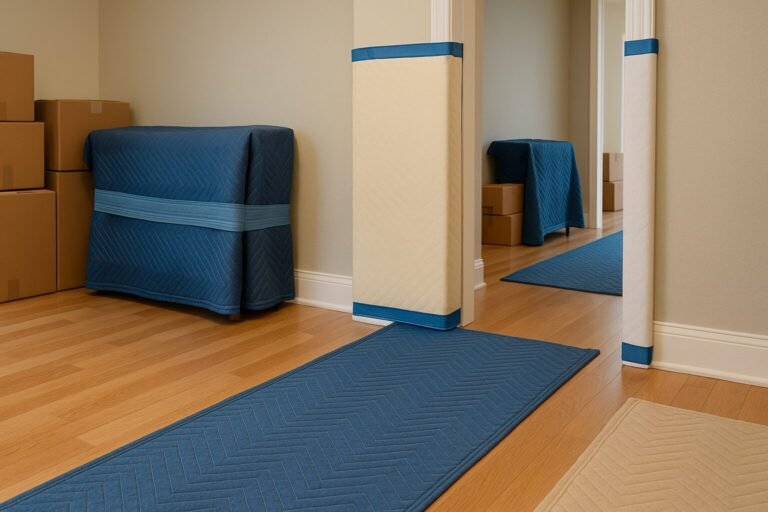
A refrigerator can damage a home before it even reaches the truck. Protect the path before you start moving.
Use:
- Cardboard or hardboard for floors
- Moving blankets for the appliance
- Corner guards if available
- Tape or stretch wrap to hold blankets in place
- Straps to keep doors closed
Do not use tape directly on stainless steel or painted surfaces if it may leave residue. Wrap the fridge first, then tape the blanket or wrap.
The doors should be secured shut, but not sealed so tightly that the gasket gets damaged. The goal is to stop the doors from swinging open while the fridge is being tilted or moved.
Step 7: Move the Refrigerator Out Carefully
Do not drag the fridge across the floor. That is how floors get scratched, tiles crack, and fridge feet bend.
With help from another person, gently slide the refrigerator forward. Furniture sliders can help if you are moving it out from a cabinet cutout. Move slowly and watch the power cord, water line, flooring, and nearby cabinets.
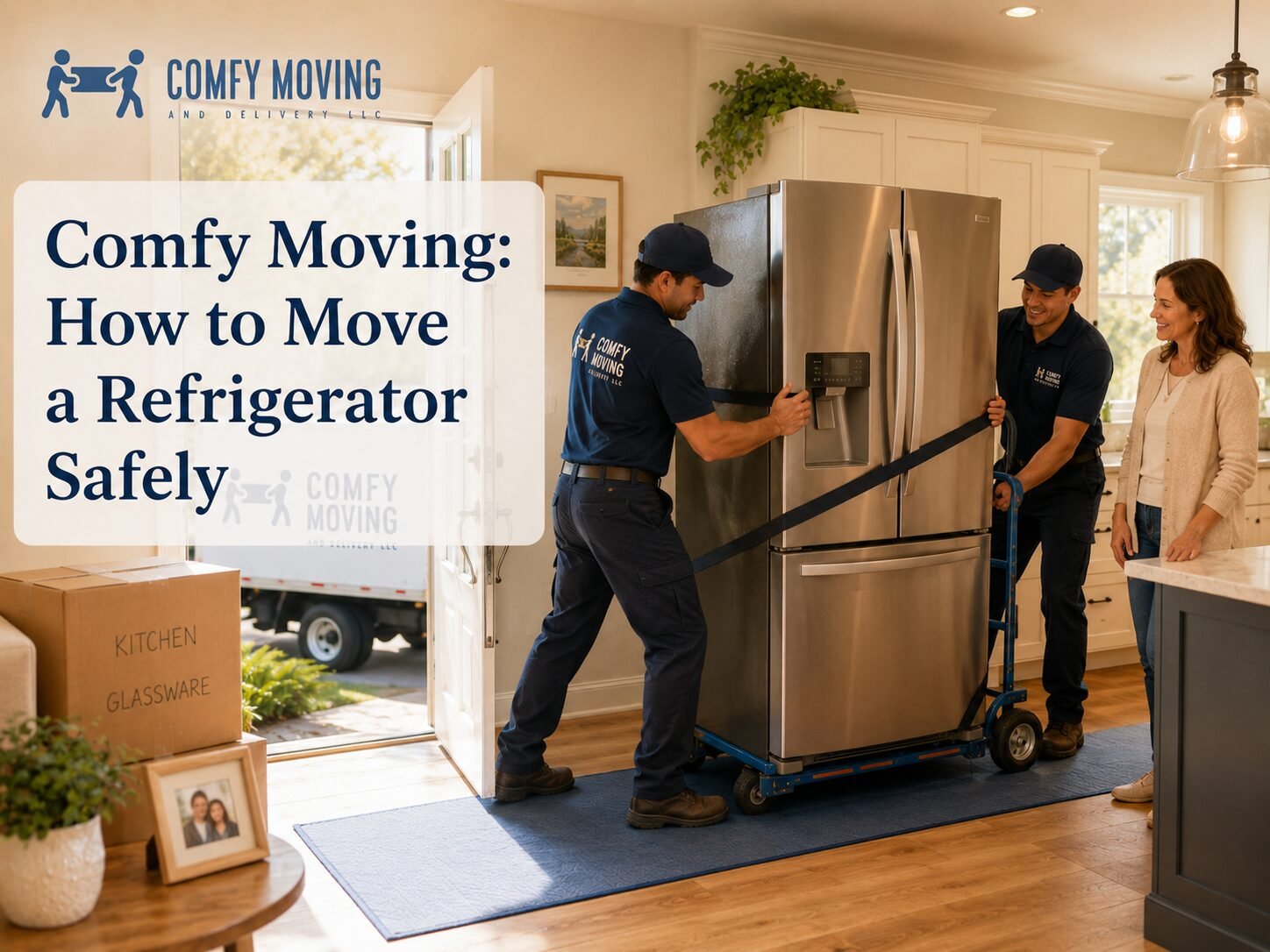
Once the fridge is clear, position the dolly. Tilt the refrigerator slightly and slide the dolly underneath. Keep control of the appliance the whole time. Never let it lean freely.
Use straps to secure the refrigerator tightly to the dolly. A loose fridge on a dolly is not safe, especially near stairs, ramps, or turns.
Step 8: Use the Dolly the Right Way
An appliance dolly gives you leverage, but it does not make the fridge weightless. One person should control the dolly while another guides from the side or front.
Move slowly through:
- Doorways
- Corners
- Hallways
- Thresholds
- Ramps
- Elevators
- Stairs
Avoid tipping the refrigerator too far. Keep it as upright as possible. If you need to angle it, do so carefully and briefly.
Stairs are the hardest part. If stairs are involved, do not improvise. A refrigerator can shift quickly, and once it starts moving the wrong way, it is difficult to stop.
Step 9: Load the Refrigerator Upright
The safest way to transport a refrigerator is upright. In a moving truck, place it against a wall and strap it securely so it cannot tip, slide, or bounce during the drive.
Use moving blankets between the fridge and nearby items. Do not stack heavy boxes against the doors. Do not place sharp furniture edges against the appliance.
A tall moving truck is better than a small pickup because it allows the refrigerator to stand upright and be strapped properly. If you are moving other large items too, plan the loading order so the fridge is stable and accessible.
Can You Lay a Refrigerator Down to Move It?
Upright is best.
If a refrigerator absolutely must be laid down, do not place it on the front or back. Lay it on its side only, and check the owner’s manual first because some models have specific instructions.
After transporting a refrigerator on its side, place it upright and wait before plugging it in. Many manufacturers recommend waiting several hours so fluids inside the cooling system can settle. If the fridge was on its side for a long time, waiting longer is safer than rushing.
When in doubt, check the manual or contact the manufacturer.
Can You Move a Refrigerator Without a Dolly?
For anything beyond sliding it out from the wall, no. A refrigerator should be moved with a dolly.
Without a dolly, you are more likely to:
- Drop the appliance
- Damage the compressor or cooling parts
- Scratch the floor
- Dent the fridge
- Injure your back, hands, or feet
- Lose control on a step or threshold
If you are renting a truck, make sure you also have an appliance dolly and straps. If you are hiring movers, ask whether they will bring the right equipment for appliances.
How Long Should You Wait Before Plugging the Fridge Back In?
If the refrigerator stayed upright the whole time, you may not need to wait long, but it is still smart to give it a short rest before plugging it in.
If the fridge was tilted heavily or laid on its side, wait several hours before turning it on. Many people use an 8-hour wait as a safe rule when the refrigerator has not stayed upright during transport.
Once plugged in, give the fridge time to reach the proper temperature before loading it with food. Use a thermometer if you want to be careful, especially after a long-distance move.
Common Refrigerator Moving Mistakes
Avoid these mistakes if you want the move to go smoothly:
- Moving the fridge alone
- Forgetting to measure doors and hallways
- Leaving food or glass shelves inside
- Dragging the fridge across the floor
- Skipping floor protection
- Taping directly onto the finish
- Moving without straps
- Loading the fridge loosely in the truck
- Laying it on the front or back
- Plugging it in too soon after laying it down
- Ignoring the owner’s manual
Most refrigerator damage happens because someone tries to save ten minutes. Take the ten minutes.
When to Hire Professional Movers for a Refrigerator
Some refrigerator moves are simple. Others are not worth the risk.
Professional help makes sense if:
- The fridge is large or very heavy
- There are stairs
- The home has narrow doorways
- You need to remove fridge doors
- The appliance has a water line
- You are moving long-distance
- You have expensive flooring
- You are moving several large appliances
- You do not have an appliance dolly
- You only need loading and unloading help
Comfy Moving can handle the heavy lifting for full home moves or smaller labor-only jobs. If the fridge is part of a bigger move, it can be wrapped, loaded, transported, and placed with the rest of your furniture and boxes. If you only need help getting it into or out of a truck, loading and unloading support can save your back and your walls.
Quick Refrigerator Moving Checklist
Before moving:
- Measure the fridge
- Measure doors, hallways, stairs, and truck space
- Empty all food
- Clean and dry the inside
- Remove shelves and drawers
- Unplug the appliance
- Disconnect the water line if needed
- Defrost the freezer
- Tape the cord safely
- Wrap the fridge with moving blankets
- Secure the doors
- Protect floors and walls
- Use an appliance dolly
- Strap the fridge to the dolly
- Transport it upright whenever possible
- Wait before plugging it in if it was tilted or laid down
Knowing how to move a refrigerator is mostly about patience. Measure first. Empty it fully. Let it dry. Protect the finish. Use a dolly. Keep it upright. Strap it well. Do not plug it in too soon if it traveled on its side.
A refrigerator is one of those items that looks simple until it is halfway through a doorway and everyone realizes the angle is wrong. Plan the route, use the right equipment, and get help before the hard part starts.
If you are moving in Orange County, Comfy Moving can help with residential moving, apartment moving, packing, loading, unloading, storage, long-distance moving, and heavy-item handling that keeps your home and appliances protected.
Services that match this moving topic