

How to Pack Clothes for Moving: Wardrobe Boxes, Suitcases, Drawers, and Pro Tips
Clothes seem easy to pack until the closet starts fighting back. Hanging shirts, winter coats, shoes, belts, gym clothes, dress pants, baby clothes, guest-room linens, and that one drawer full of “maybe I’ll wear this someday” items can swallow half your moving week.
Knowing how to pack clothes for moving saves space, protects your wardrobe, and makes unpacking much less annoying. The goal is not to throw everything into bags and hope for the best. The goal is to move your clothes clean, organized, easy to carry, and easy to put away.
This guide walks you through the best ways to pack clothes using wardrobe boxes, suitcases, dresser drawers, vacuum bags, garment bags, and simple labeling tricks. Use it for an apartment move, family home move, senior move, dorm move, or long-distance relocation.
Start With the Closet, Not the Boxes
Before you pack a single shirt, take everything out or work section by section. Clothes multiply quietly. You may think you have one closet to pack, then suddenly you find off-season coats, old work uniforms, formalwear, spare bedding, beach towels, Halloween costumes, and five pairs of jeans that all somehow count as “backup.”
Sort clothing into four groups:
- Keep
- Donate
- Sell
- Toss
Be honest. If it does not fit, is damaged beyond repair, feels uncomfortable, or belongs to a version of your life that no longer exists, do not automatically pay to move it.
A lighter closet means fewer boxes, fewer wardrobe cartons, less truck space, and faster unpacking.
Wash and Dry Clothes Before Packing
Pack clean clothes whenever possible. Moving day already comes with dust, floor traffic, truck loading, and cardboard. Starting with fresh laundry helps your clothes arrive ready to wear.
Before packing:
- Wash everyday clothes
- Dry everything completely
- Dry clean formal pieces if needed
- Repair loose buttons or small tears
- Empty pockets
- Remove hangers from anything being folded
- Separate dirty laundry from clean clothing
Do not pack damp clothes. Even a little moisture can create mildew or musty smells when clothes sit tightly packed in boxes, bags, or suitcases.
Pack a Moving Week Bag First
Before the main packing starts, set aside clothing for the final days in your old place and the first days in your new one.
Pack a suitcase, duffel, or overnight bag with:
- Pajamas
- Underwear
- Socks
- Comfortable moving-day clothes
- A work outfit if needed
- Shoes for walking and lifting
- Toiletries
- Medication
- Phone charger
- Laundry bag
- Light jacket
- Clothes for children
- Pet supplies if needed
Do not assume you will unpack everything the first night. You probably will not. A moving week bag saves you from digging through six boxes just to find a clean shirt.
If you are moving long-distance, pack more than one outfit. Delivery windows, travel delays, and storage gaps can stretch longer than expected.
Choose the Right Packing Method for Each Type of Clothing
There is no single best way to pack every piece of clothing. Hanging items, folded clothes, delicate garments, shoes, and bulky coats all need different handling.
Use this simple rule:
- Hanging clothes go in wardrobe boxes or garment bags.
- Folded clothes go in boxes, suitcases, bins, or drawers.
- Bulky clothes go in vacuum bags or large lightweight boxes.
- Delicate clothes need garment bags or careful wrapping.
- Shoes should be packed separately from clean clothing.
That one rule keeps most clothing chaos under control.
Wardrobe Boxes: Best for Hanging Clothes
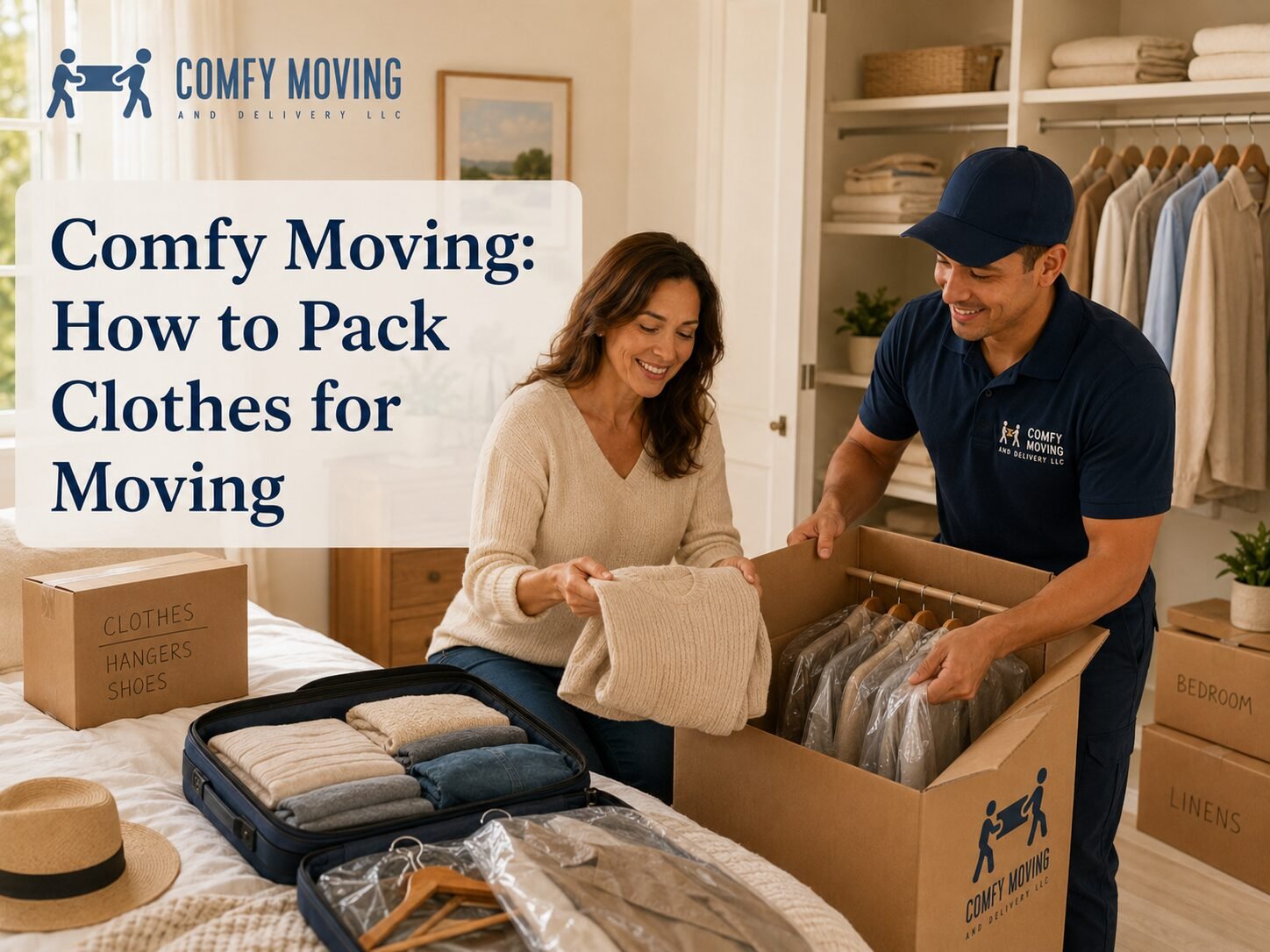
Wardrobe boxes are one of the easiest ways to move clothes on hangers. They have a hanging bar inside, so you can take clothes from the closet and place them directly into the box.
Use wardrobe boxes for:
- Suits
- Dresses
- Blazers
- Coats
- Dress shirts
- Blouses
- Formalwear
- Uniforms
- Long garments
- Clothes you do not want wrinkled
Do not overstuff the box. Clothes need a little breathing room so they do not arrive crushed.
You can also use the bottom of a wardrobe box for light items like sweaters, pillows, scarves, hats, or soft bags. Just do not place heavy items at the bottom where they can pull on hanging clothes or make the box difficult to move.
Suitcases: Best for Heavy Folded Clothes
Suitcases are made to carry clothes, so use them. Rolling suitcases are especially helpful because they reduce the number of boxes you need to carry.
Use suitcases for:
- Jeans
- Sweaters
- T-shirts
- Workout clothes
- Shoes in bags
- Pajamas
- Casual outfits
- Travel outfits
- First-week clothing
Hard-shell suitcases protect clothing well, while soft duffels are useful for flexible items like hoodies, leggings, and casual wear.
For long-distance moves, pack at least one suitcase like you are going on a short trip. Keep it with you instead of loading it deep into the truck.
Dresser Drawers: Best When They Are Not Too Heavy
If your dresser drawers are full of lightweight folded clothes, you may be able to move the clothes inside the drawers.
This works well for:
- T-shirts
- Socks
- Underwear
- Pajamas
- Workout clothes
- Kids’ clothes
- Soft seasonal items
Remove the drawer, cover the top with stretch wrap, and keep the contents in place. At the new home, remove the wrap and slide the drawer back into the dresser.
Be careful with heavy drawers. A drawer packed with jeans, sweaters, or accessories can become too heavy to carry safely. In that case, transfer some items into boxes or suitcases.
Also check with your movers before leaving clothes inside drawers. Depending on the furniture, weight, stairs, and loading plan, it may be better to empty them.
Moving Boxes: Best for Everyday Folded Clothes
Small and medium boxes work well for folded clothes. Large boxes can be useful for bulky but light items, but they should not be packed with heavy clothing.
Use medium boxes for:
- T-shirts
- Casual pants
- Shorts
- Kids’ clothes
- Sweaters
- Light jackets
- Workout clothes
Use large boxes for:
- Pillows
- Comforters
- Blankets
- Winter coats
- Soft bedding
- Lightweight seasonal clothing
Line the bottom of the box with clean packing paper if you want extra protection from dust. Do not overpack. Clothing boxes should close flat, stack safely, and be easy to lift.
Fold or Roll Clothes?
Both work. Choose based on the item and how much space you need to save.
Folding works best for:
- Jeans
- Dress pants
- Sweaters
- Collared shirts
- Structured clothing
- Items you want to keep flatter
Fold clothes on a clean bed or table. Smooth each item before placing it in the box or suitcase. Stack similar items together so unpacking is faster.
Rolling works best for:
- T-shirts
- Leggings
- Athletic clothes
- Pajamas
- Casual tops
- Travel outfits
- Kids’ clothes
Rolling can save space and keep outfits easy to see. It is especially useful in suitcases and duffel bags.
The tradeoff is wrinkles. If an item wrinkles easily or needs to look polished right away, fold it carefully or keep it on a hanger.
Garment Bags: Best for Delicate or Expensive Clothing
Garment bags add protection for clothing that needs more care than a standard wardrobe box.
Use garment bags for:
- Wedding outfits
- Formal dresses
- Suits
- Leather jackets
- Vintage clothing
- Lace
- Silk
- Cashmere
- Chiffon
- Designer pieces
- Sentimental garments
You can place garment bags inside wardrobe boxes or transport them in your own car. For very delicate clothing, keeping it with you may be the safer option.
Avoid plastic dry-cleaning bags for long storage. They can trap moisture and do not provide much real protection during a move.
Trash Bags: Cheap, Fast, and Useful for Short Moves
Large drawstring trash bags can be used for hanging clothes when you need a quick, low-cost option.
Here is the simple method:
- Keep clothes on hangers.
- Group a small section together.
- Pull a large trash bag up from the bottom.
- Tie the drawstring around the hanger hooks.
- Carry the bundle carefully.
This works best for short local moves or casual clothing. It is not ideal for expensive, delicate, or wrinkle-prone garments.
Do not use thin trash bags. They tear easily and can make clothes slide around.
Vacuum Bags: Best for Bulky Seasonal Clothes
Vacuum bags are great for items that take up too much space.
Use them for:
- Winter coats
- Puffy jackets
- Sweaters
- Comforters
- Blankets
- Extra bedding
- Seasonal clothing
- Soft storage items
They reduce volume and help protect against dust and moisture. They are especially useful if some clothing is going into storage.
Do not vacuum-seal delicate structured garments, leather, fur, or anything that should not be compressed. Some fabrics do not bounce back well after being tightly sealed.
Plastic Bins: Best for Storage and Off-Season Clothes
Clear plastic bins are useful when clothes will not be unpacked right away.
Use bins for:
- Off-season clothing
- Kids’ hand-me-downs
- Holiday outfits
- Keepsake clothing
- Sports uniforms
- Costume pieces
- Long-term storage
Clear bins make it easier to see what is inside. If you use solid bins, label them clearly on at least two sides.
Do not pack wet, dirty, or heavily perfumed clothing in sealed bins. Anything trapped inside will stay trapped.
How to Pack Shoes Without Ruining Clothes
Shoes should not be packed loose with clean clothing. Even clean shoes can carry dirt, grit, or odor.
Before packing shoes:
- Clean the soles
- Let shoes dry completely
- Stuff delicate shoes with paper or socks
- Wrap pairs separately
- Use shoe bags, plastic bags, or original boxes
- Pack heavy shoes at the bottom
Keep shoes with shoes. Do not drop sneakers into a box of clean shirts.
For boots, add rolled socks or packing paper inside so they keep their shape. For expensive shoes, use the original box or a sturdy small moving box.
Keep Accessories Together
Accessories are easy to lose during a move. Pack them in small containers, pouches, or labeled bags.
Group together:
- Belts
- Scarves
- Hats
- Ties
- Jewelry
- Watches
- Sunglasses
- Hair accessories
- Small bags
- Wallets
Keep valuable jewelry, watches, and sentimental pieces with you instead of placing them on the moving truck.
A simple trick: use small zip bags for accessories, then place those bags inside a clearly labeled box or suitcase.
Label Clothing by Person, Room, and Priority
Good labels make the new closet easier to rebuild.
Use labels like:
- Primary Bedroom – Work Clothes – Open First
- Kids’ Room – Pajamas and Socks
- Guest Room – Linens
- Closet – Winter Coats – Storage
- Primary Bedroom – Shoes
- Baby Room – Daily Clothes – Open First
Label at least two sides of each box or bin. Top-only labels disappear once boxes are stacked.
If you have multiple family members, add names to the labels. This helps movers place boxes in the right rooms and prevents everyone’s clothes from getting mixed together.
Pack by Category, Not by Panic
The fastest way to create a mess is to pack random closet items together.
Try categories like:
- Work clothes
- Casual clothes
- Sleepwear
- Workout clothes
- Formalwear
- Seasonal clothing
- Shoes
- Accessories
- Kids’ clothes
- Linens
- Laundry
- Donation items
Packing by category makes unpacking feel like putting things away, not solving a mystery.
Do Not Move Dirty Laundry in Random Boxes
Dirty laundry deserves its own bag or hamper. Do not mix it with clean clothes, towels, or bedding.
Use:
- A laundry basket
- A drawstring laundry bag
- A garbage bag
- A separate suitcase
- A collapsible hamper
Pack detergent or laundry pods separately and safely. If you will need laundry right away, keep those supplies in your essentials box.
What to Keep With You
Some clothing and personal items should stay in your car or personal bag.
Keep these separate:
- Moving week outfits
- Work outfit
- Comfortable shoes
- Pajamas
- Underwear and socks
- Medication
- Jewelry
- Important documents
- Expensive accessories
- Baby clothing
- Pet supplies
- Weather-specific clothing
If you are moving long-distance, pack for delays. A few extra outfits are much easier to carry than regret.
Packing Clothes for Storage
If some clothes are going into storage, pack them differently than clothes you will unpack right away.
For storage:
- Wash everything first
- Make sure clothes are fully dry
- Use plastic bins or vacuum bags
- Avoid cardboard for long-term storage in damp areas
- Add clear labels
- Keep delicate items in breathable garment bags
- Do not store leather or fur in airtight plastic
- Keep bins off the floor if possible
Seasonal clothing, extra bedding, and rarely worn items can go to storage. Daily outfits should stay easy to access.
Quick Clothing Packing Supplies List
You may need:
- Wardrobe boxes
- Suitcases
- Medium moving boxes
- Large moving boxes
- Garment bags
- Vacuum bags
- Plastic storage bins
- Stretch wrap
- Packing paper
- Zip bags
- Shoe bags
- Labels
- Permanent markers
- Laundry bags
- Trash bags
- Tape
- Scissors
If Comfy Moving is helping with packing, you can use professional packing materials and support instead of buying everything yourself.
Common Clothes Packing Mistakes
Avoid these if you want unpacking to be easier:
- Packing clothes before decluttering
- Packing damp laundry
- Mixing shoes with clean clothes
- Leaving valuables in clothing boxes
- Using boxes that are too large and heavy
- Forgetting a first-week bag
- Overstuffing wardrobe boxes
- Labeling only the top of boxes
- Vacuum-sealing delicate clothing
- Packing all family members’ clothes together
- Sending essential outfits on the truck during a long-distance move
Most clothing problems come from rushing. Slow down at the closet stage and the rest becomes easier.
How Comfy Moving Can Help
Packing clothes is not the heaviest part of moving, but it can take longer than expected. Closets are full of small decisions, and those decisions become tiring when the rest of the home still needs attention.
Comfy Moving helps with packing services, local moving, long-distance moving, apartment moves, senior moving, loading, unloading, storage, and furniture assembly across Orange County. If you want your wardrobe packed neatly, your furniture handled carefully, and your moving day to feel less scattered, the crew can help with the parts you do not want to wrestle with alone.
Knowing how to pack clothes for moving comes down to matching the item with the right container. Wardrobe boxes for hanging clothes. Suitcases for heavy folded items. Drawers for lightweight clothing when it makes sense. Vacuum bags for bulky seasonal pieces. Garment bags for delicate outfits. Labels for everything.
Do not pack the closet at random. Sort first, wash what needs washing, keep your first-week bag close, and label each box like you are doing a favor for your future tired self.
A well-packed wardrobe makes the first week in your new home feel much more normal. And after moving day, normal is exactly what you want.
Services that match this moving topic