

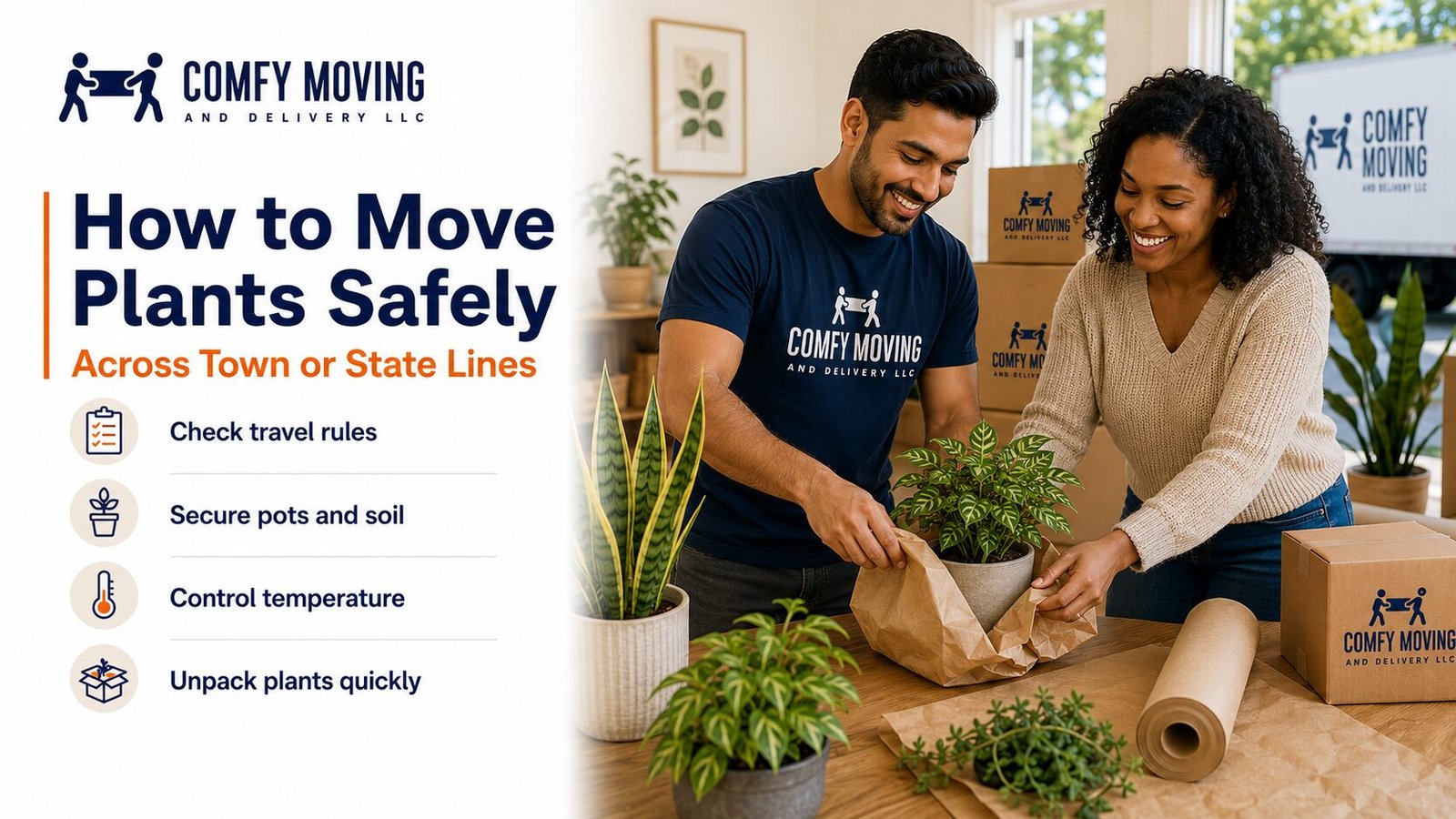
How to Move Plants Safely Across Town or State Lines
Houseplants do not fit neatly into the usual moving-day categories.
They are not sturdy furniture, sealed boxes, or replaceable packing supplies. They have delicate stems, loose soil, breakable pots, and strong opinions about sudden changes in temperature. A plant that has spent years beside the same window may struggle when it is boxed, carried downstairs, placed in a vehicle, and driven into a different climate.
Knowing how to move plants when moving requires more than placing every pot in the back seat. You need to decide which plants should make the trip, check transportation rules, prepare them gradually, and keep them stable without cutting off airflow.
A short trip across town is usually manageable with basic supplies. An interstate relocation takes more planning because agricultural restrictions, long travel times, hotel stops, and weather can all affect the move.
Decide Which Plants Should Come With You
Start by looking at the collection realistically.
A healthy plant in a manageable pot may be worth the effort. A six-foot plant in a heavy ceramic container may take up more vehicle space than several moving boxes.
Consider rehoming a plant when it:
- Is already struggling with pests or disease
- Has become too large to move safely
- Will not suit the light or climate at the new home
- Is planted in an extremely heavy container
- Cannot legally enter the destination state
- Is easy to replace locally
- Has roots or branches that are already badly damaged
- Would require more transportation space than you can provide
Offer unwanted plants to friends, neighbors, local gardening groups, schools, or community organizations. Give yourself enough time to find them a suitable home rather than leaving the decision until moving morning.
For a sentimental plant that is too large to transport, taking a cutting may let you carry part of it to the new home without moving the entire pot.
Ask Whether Your Moving Company Can Transport Plants
Do not assume that live plants can be loaded with your furniture and boxes.
Moving trucks are built for household belongings, not climate-sensitive living cargo. The inside of a trailer can become extremely hot or cold, and plants may spend hours without suitable airflow or light.
Policies also vary by moving company, distance, route, and destination.
Tell your Comfy Moving coordinator about the plants while planning the move. We can confirm what can be loaded under the circumstances and help you arrange the rest of the household around the space your plants will need.
For many long-distance moves, the personal vehicle is the safer place for houseplants because you can control the temperature, check them during stops, and respond quickly if a pot tips over.
Do not hide plants inside sealed moving boxes without informing the crew. Unmarked live cargo may be loaded in a position that is unsuitable for it.
Check Interstate Plant Restrictions Early
Crossing a state line with plants is not always as simple as loading the car and driving.
For the household portion of a state-to-state relocation, Comfy Moving’s interstate movers can coordinate the broader move while you arrange compliant, temperature-controlled travel for live plants.
States use agricultural rules to reduce the spread of invasive insects, plant diseases, contaminated soil, and other threats. Requirements can depend on:
- The state you are leaving
- The destination state
- The plant species
- Whether the plant has lived indoors or outdoors
- The type of soil in the pot
- Visible signs of pests or disease
- Current federal or state quarantine areas
USDA recommends inspecting plants carefully before moving them long distances and checking for insects, egg masses, discoloration, or disease. Federal and state restrictions may also apply to soil moved from quarantined areas.
Contact the agriculture department in your destination state before packing. Rules can change, so avoid relying on an old moving checklist or an informal gardening forum.
Moving Plants Into California
California applies specific requirements to privately owned houseplants entering the state.
Eligible houseplants generally need to have been grown indoors, be intended for personal use rather than resale, appear healthy and pest-free, and be planted in sterile, commercially packaged potting mix. Plants grown outdoors or in backyard soil may not qualify. Travelers must declare houseplants and keep them accessible for inspection.
Do not bury the plants behind luggage where an inspector cannot reach them. Keep the pots organized and be ready to explain where they were grown and what soil was used.
Check for Spongy Moth Requirements
When moving from a federally regulated spongy moth area to a location outside that area, USDA may require an inspection of outdoor household items.
That can include patio plants, outdoor pots, garden equipment, furniture, grills, trailers, and other objects stored outside. The inspection is intended to prevent egg masses and other life stages from traveling to new areas. USDA provides a self-inspection checklist and certification process.
This rule is especially relevant to outdoor containers. Check the underside, drainage holes, rims, saucers, and textured surfaces where insects or egg masses may be hidden.
Start Preparing Plants Several Weeks Before the Move
Plants handle travel better when preparation happens gradually.
Avoid making several major changes at once. Repotting, pruning, relocating, watering heavily, and transporting a plant on the same day creates unnecessary stress.
About Three Weeks Before Moving
Review the condition of every plant.
Remove dead leaves and damaged stems. Light pruning can make a plant more compact and reduce the chance of branches snagging on doors or packing material.
Do not aggressively reshape a healthy plant just to make it fit in a smaller box. Heavy pruning immediately before transportation may create additional stress.
If a plant sits in a large ceramic, stone, concrete, or clay container, consider moving it into a lightweight plastic nursery pot. Pack the decorative planter separately as a fragile household item.
Repotting should happen early enough for the plant to settle before travel. Avoid changing the soil or pot shortly before moving day unless the current container is unsafe.
About One Week Before Moving
Inspect every plant for pests.
Check:
- Both sides of the leaves
- Stems and branch joints
- The soil surface
- The rim of the pot
- Drainage holes
- The saucer beneath the pot
- Supports, stakes, and trellises
Look for insects, webbing, sticky residue, unusual spotting, egg masses, or damaged leaves.
Keep an affected plant away from the rest of the collection. Treat the problem appropriately before moving it into a car or new home.
Bringing one infested plant can spread pests to every other plant packed nearby.
Two or Three Days Before Moving
Water plants lightly enough to keep the soil from drying out during a short trip.
The soil should feel slightly moist, not soaked. A heavily watered pot is messier, heavier, and more likely to leak into the box or vehicle.
The right timing depends on the plant, pot size, weather, and length of the trip. Succulents and cacti may need little or no extra water, while moisture-loving plants may require closer monitoring.
Do not apply fertilizer immediately before moving. The goal is to keep the plant stable, not encourage new growth during a stressful trip.
Gather Plant Packing Supplies
Prepare the materials before moving morning.
You may need:
- Small and medium moving boxes
- Plastic nursery pots
- Plastic plant saucers
- Packing paper
- Cardboard dividers
- Bubble wrap
- Towels
- Foam sheets
- Stretch wrap
- Plastic bags
- Paper bags
- Lightweight sheets
- Plant stakes
- Soft garden ties
- Packing tape
- Scissors
- Permanent markers
- Work gloves
- A spray bottle
- A small watering container
- Paper towels
- A dustpan and brush
Use boxes that are strong enough to support the pots without bending. Avoid oversized cartons that allow the plants to tip from side to side.
Do not seal plants inside airtight plastic for the entire trip. Plastic may be useful around the pot or soil, but the leaves still need airflow.
Prepare Each Pot Before Packing
Remove standing water from the saucer and wipe the outside of the pot.
Check for cracks. A damaged ceramic pot may break when lifted or vibrate apart during the drive.
Place a plastic bag around the pot to contain loose soil. Pull it upward to the base of the plant and secure it gently around the container rather than tightly around the stem.
Another option is to place cardboard or packing paper over the soil surface and secure it to the pot with stretch wrap. Leave the stem and foliage uncovered.
Do not tape directly to a finished or painted planter. Adhesive may leave residue or remove the surface coating.
For a plant with a loose stake, either secure the stake or remove and pack it separately. A moving stake can strike branches and leaves during transportation.
How to Pack Small Plants
Small plants can often share one reinforced box.
Choose plants of a similar height and pot size. Place the heaviest containers near the center or bottom of the box so the load remains balanced.
Follow these steps:
- Reinforce the bottom seam with packing tape.
- Add a folded towel or layer of crumpled packing paper.
- Place each pot inside a plastic saucer or protective bag.
- Arrange the pots upright with space between the leaves.
- Fill gaps around the containers with paper, towels, or foam.
- Add cardboard dividers when pots could strike one another.
- Make sure every plant remains upright when the box moves.
- Leave the top open or create ventilation openings.
- Label the box clearly.
The filler should hold the pots rather than press against the foliage.
A good label might read:
LIVE PLANTS – KEEP UPRIGHT – DO NOT STACK
Add the destination room if the plants should be taken directly to a sunroom, kitchen, patio, or bedroom.
How to Pack Tall Plants
Tall plants need support around the pot and protection around the foliage.
Place the pot inside a sturdy box that reaches at least halfway up the container. Fill the surrounding space so the base cannot shift.
Use soft plant ties to bring wide branches slightly closer to the main stem. Do not pull them tightly or force the plant into an unnatural shape.
For delicate foliage, create a loose paper sleeve:
- Stand the plant upright.
- Wrap kraft paper or a lightweight sheet around the foliage.
- Begin near the pot and work upward.
- Keep the material loose around the leaves.
- Secure the outer layer to itself.
The sleeve can reduce snagging and wind damage while the plant moves through doorways.
Do not wrap foliage tightly in bubble wrap. Plastic can trap heat, crush leaves, and reduce airflow.
Protect Heavy or Decorative Planters
Ceramic, terracotta, concrete, and decorative planters should be treated as fragile items.
When practical, move the plant into a plastic nursery pot several weeks before the relocation. Clean and dry the empty decorative container, wrap it in packing paper and bubble wrap, and place it in a separate box.
When the plant must remain in its original pot:
- Inspect the container for cracks
- Cover the soil
- Wrap the exterior in packing paper
- Add bubble wrap around the paper
- Protect the rim and base
- Place the pot inside a fitted box
- Fill every gap around the container
- Lift from the bottom rather than the rim
Do not carry a heavy planter by the plant stem, branches, decorative handles, or upper lip.
A dolly may help with large containers on flat surfaces. Secure the pot before rolling it and keep another person nearby to stabilize the foliage.
Pack Cacti and Succulents Carefully
Cacti create two separate problems: their spines can injure the carrier, and rough handling can damage the plant.
Wear thick gloves and avoid gripping the plant directly.
Wrap the pot securely and create a loose paper collar around the cactus. Several layers of folded cardboard can form a protective barrier without pressing heavily against the spines.
Place the cactus in an individual box or use rigid dividers between plants. Mark the carton so anyone handling it knows that it contains sharp plants.
Do not water cacti heavily before the move. Wet soil adds weight and may increase the chance of root problems during a long trip.
Succulents often have leaves that detach easily. Keep the pots level, avoid tight wrapping around the foliage, and do not stack anything above them.
Move Hanging Plants Without Tangled Vines
Remove hanging plants from their hooks before moving day.
Take down any detachable metal chains or hooks and pack them separately. Cover sharp ends so they cannot puncture the box.
Gently gather long vines and place them around the top of the pot. Use soft paper or loose ties to prevent tangling.
Do not knot, sharply bend, or tightly wrap the vines.
Set the pot in a reinforced box and stabilize the base. Keep the foliage inside the box without crushing it under the flaps.
Label the carton and leave the top open when practical.
Load Plants Into Your Personal Vehicle
The passenger area of a car, SUV, or van is usually more suitable than a sealed trunk.
A trunk has limited airflow and can experience rapid temperature changes. Keep the plants where you can monitor them during the trip.
Before loading:
- Clean the vehicle floor
- Lay down a waterproof liner or old blanket
- Make space away from loose luggage
- Adjust the temperature
- Keep paper towels and cleaning supplies nearby
- Plan how the boxes will remain upright
Place heavy plants on the floor rather than on a high seat. Use seat belts, boxes, rolled towels, or other supports to stop the containers from sliding.
Do not place plants directly in front of an air-conditioning or heating vent. Strong hot or cold airflow can damage leaves.
Keep them away from loose tools, suitcases, sports equipment, and other objects that may shift during braking.
Moving Plants Across Town
A local move reduces travel time, but the plants still need a separate plan.
Move them after most furniture and boxes have left the home. This keeps plants away from crowded hallways and prevents branches from being broken while large items pass.
When possible:
- Prepare the new space first.
- Load the plants into your personal vehicle.
- Drive them directly to the destination.
- Unpack them before returning for another load.
- Keep them away from active furniture assembly.
Avoid placing plants on a sidewalk while the truck is loaded. Direct sun, wind, cold pavement, or a passing cart can damage them within minutes.
Moving Plants Long Distance
A long trip requires more temperature control and regular checks.
Keep plants in the passenger compartment rather than attaching them to an open trailer or roof rack.
During the drive:
- Maintain a comfortable interior temperature
- Avoid direct afternoon sunlight through the windows
- Check that boxes remain upright
- Remove fallen leaves and spilled soil
- Look for wilting or heat stress
- Avoid frequent watering
- Keep ventilation around the foliage
- Recheck the load after sudden braking or rough roads
Plants usually tolerate moderate darkness for a limited trip better than extreme heat, freezing temperatures, or physical damage.
Do not leave the vehicle sealed in direct sunlight while stopping for food or fuel. Park in shade and keep the stop brief.
Moving Plants in Hot Weather
Load the plants as late as possible and unload them promptly.
Cool the vehicle before placing them inside. Avoid pressing leaves against hot windows or metal surfaces.
Use light paper coverings to reduce intense sun exposure, but do not seal the plants in thick plastic.
Carry a small amount of water, but do not respond to every wilted leaf by soaking the soil. Heat stress and thirst are not always the same problem.
For overnight stops, bring the plants into the hotel room when permitted. A parked vehicle can remain dangerously hot long after sunset.
Moving Plants in Cold Weather
Cold air can damage tropical plants during even a short trip from the doorway to the vehicle.
Warm the car before loading. Wrap the pots in paper, towels, or lightweight blankets to provide temporary insulation.
A loose paper sleeve can also protect the foliage from wind.
Keep the time outdoors as short as possible. Prepare doors, elevators, and the vehicle before carrying the plants outside.
Do not place them against a frozen window or directly beside a heater. Sudden intense heat can be stressful after cold exposure.
Plan for Overnight Stops
Confirm that your hotel allows plants inside the room.
Bring a waterproof liner or tray so the pots do not mark the floor or furniture.
Once inside:
- Remove tight outer coverings
- Check the leaves and soil
- Give the plants airflow
- Keep them away from heating and cooling units
- Do not leave them in a dark hallway
- Repack them before returning to the vehicle
Water only when the soil genuinely needs it. Repeatedly adding water at every stop can leave the pots saturated by the end of the trip.
Consider Taking Cuttings Instead
A cutting can be a practical alternative when the full plant is too large, restricted, or fragile to move.
Research the correct propagation method for the species before cutting anything.
A basic approach may involve:
- Using clean, sharp scissors or pruning shears.
- Cutting a healthy stem in the appropriate location.
- Removing leaves that would sit below the rooting line.
- Wrapping the cut end in a slightly damp paper towel or moss.
- Covering the damp portion with a small plastic bag.
- Keeping the leaves outside the sealed section.
- Placing the cutting in a light, protective container.
Do not leave the entire cutting sealed in wet plastic. Excess moisture and poor airflow may cause rot.
Label every cutting, particularly when several plants look similar after the leaves have been trimmed.
Unpack Plants Soon After Arrival
Plants should not remain boxed while the rest of the home is unpacked.
Carry them to a quiet room away from heavy furniture traffic. Remove paper sleeves, plastic around the pots, and temporary ties.
Check for:
- Broken branches
- Bent leaves
- Spilled soil
- Cracked pots
- Pest activity
- Dry or saturated soil
- Cold or heat damage
Trim only clearly broken material. Avoid performing a major pruning immediately after the trip.
Place each plant in lighting similar to what it received in the previous home. Moving it directly from a dim travel box into harsh sunlight can add another sudden change.
Give Plants Time to Adjust
A plant may droop, lose a few leaves, or pause its growth after moving.
That does not always mean it needs more water, fertilizer, or another pot.
Let the plant settle before making major changes. Keep its watering routine as consistent as the new environment allows.
Avoid immediate repotting unless:
- The original pot broke
- The soil spilled out
- The roots are exposed
- The container no longer drains
- A pest or disease problem requires action
Watch the plant for several weeks. Adjust the lighting gradually rather than moving it from one room to another every day.
Common Plant Moving Mistakes
Watering Heavily on Moving Morning
Saturated soil is heavier and more likely to leak. Water earlier and aim for lightly moist soil.
Packing Plants in Sealed Boxes
A fully taped carton limits airflow and hides the plant from anyone handling it. Use ventilation and clear labels.
Loading Plants in the Moving Truck Without Asking
Company policies and state rules vary. Discuss live plants before moving day.
Leaving Plants in the Trunk
A closed trunk offers little ventilation and may become extremely hot or cold.
Using Oversized Boxes
A large empty space allows the pot to tip and spill. Choose a fitted carton and stabilize the base.
Packing Wet or Infested Plants
Moisture can create a mess, while pests may spread through the entire collection and into the new home.
Carrying Heavy Pots by the Rim
The rim may crack or separate. Support heavy containers from underneath.
Wrapping Leaves Tightly in Plastic
Plastic can trap heat and moisture while crushing delicate foliage. Use loose paper when protection is needed.
Ignoring Interstate Rules
A healthy-looking plant may still be restricted because of its species, soil, outdoor exposure, or place of origin.
Repotting Immediately After Arrival
The plant has already experienced transportation and a new environment. Give it time to settle unless the pot is damaged.
When Moving Help Makes Sense
Plants may need to travel with you, but the rest of the move does not have to compete for the same time and attention.
Comfy Moving can handle packing supplies, household boxes, furniture protection, loading, transportation, unloading, and furniture setup while you keep your plants in a temperature-controlled personal vehicle.
Professional moving support may be useful when:
- You have many plants and limited vehicle space
- Large furniture must be cleared before plants can leave
- Heavy decorative planters need separate packing
- The move includes stairs or elevators
- You are relocating across state lines
- You need labor-only loading or unloading
- Your household must be packed on a short schedule
- You want the new home ready before bringing plants inside
Tell us about large pots, indoor trees, outdoor planters, and other unusual items during the quote process. Early planning helps us prepare the route, materials, and loading order without making assumptions about live-plant transportation.
Frequently Asked Questions
What Is the Best Way to Move Houseplants?
Prepare them gradually, inspect them for pests, water them lightly before the move, stabilize each pot in a fitted box, and transport them in a temperature-controlled personal vehicle whenever practical.
Can Movers Transport Houseplants?
Policies vary by company, route, distance, and weather. Ask the moving company before moving day and confirm whether state regulations affect the shipment.
How Do You Keep Soil From Spilling?
Cover the soil surface with paper or cardboard and secure it around the pot. A plastic bag placed around the container can provide additional protection.
Should Plants Be Watered Before Moving?
Water them early enough for excess moisture to drain before transportation. Avoid soaking the soil on moving morning.
Can Plants Go in a Closed Moving Box?
Plants need ventilation and should not remain hidden in a tightly sealed box. Use an open top or ventilation openings and label the carton clearly.
Can Plants Be Transported in a Car Trunk?
The passenger compartment is generally a better choice because it provides more stable temperature and airflow. A trunk may become excessively hot or cold.
How Do You Move Large Indoor Plants?
Stabilize the pot in a strong box, support wide branches with soft ties, cover the foliage loosely with paper, and use at least two people or a dolly for a heavy container.
Can You Move Plants Across State Lines?
Often yes, but rules vary by plant, soil, origin, destination, and current quarantine restrictions. Check federal guidance and contact the destination state’s agriculture department before traveling.
Do Plants Need to Be Declared When Entering California?
Houseplants entering California should be declared and kept accessible for inspection. They must meet the state’s current entry requirements.
How Long Can Plants Stay in Boxes?
Keep the boxed period as short as practical. Unpack plants promptly after arrival and provide airflow and appropriate light.
What Should You Do if a Plant Is Too Large to Move?
Consider giving it to someone locally or taking healthy cuttings that can be propagated after the relocation.
Should You Repot Plants After Moving?
Wait until the plant has adjusted unless its pot is broken, its roots are exposed, or another urgent problem requires repotting.
Let the Plants Ride While the Rest of the Home Moves
The practical answer to how to move plants when moving is to treat them more like passengers than ordinary cargo.
Prepare them before moving week, check the route’s agricultural rules, keep the pots stable, protect the foliage loosely, and control the temperature during travel. Once you arrive, unpack the plants before they spend another day in the dark.
Comfy Moving can take care of the boxes, furniture, loading, transportation, and setup while you give the living part of your household the space and attention it needs.
Services that match this moving topic