


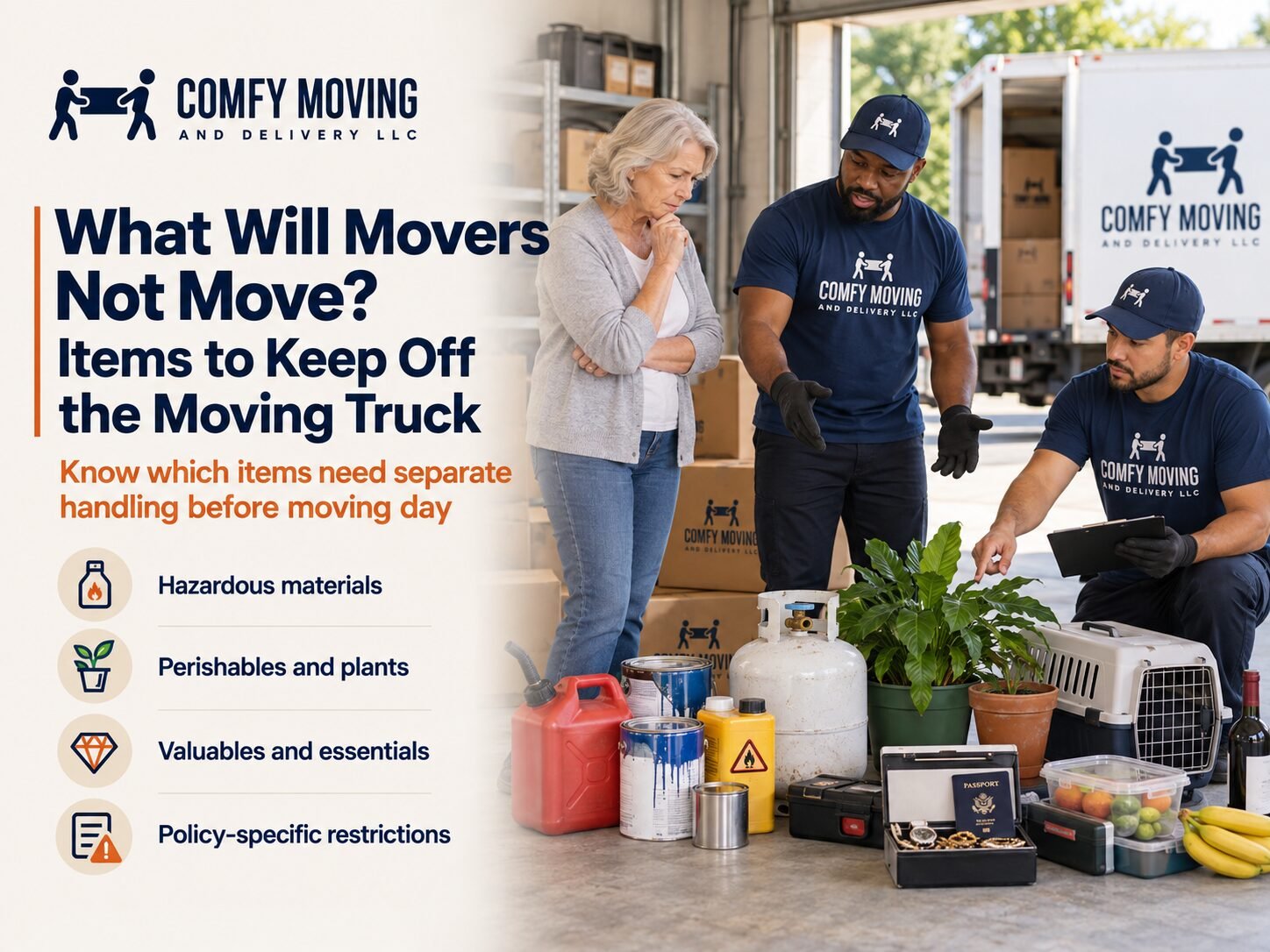
What Will Movers Not Move? Items to Keep Off the Moving Truck
Movers generally will not transport hazardous materials, fuel, explosives, compressed gases, or anything that creates an unreasonable safety risk. Many companies also exclude perishables, plants, alcohol, firearms, ammunition, and irreplaceable personal items, but the exact policy depends on the mover and route. Ask for the prohibited-items list before packing.
Do not hide a restricted item in a box. A leaking chemical, pressurized cylinder, or fuel container can endanger the crew, the truck, your belongings, and people nearby.
Hazardous and Flammable Materials
Federal hazardous-material guidance covers categories such as explosives, compressed gases, flammable liquids and solids, oxidizers, poisons, corrosives, and radioactive materials. Common household examples include:
- Gasoline, diesel, kerosene, and other fuels
- Propane tanks and some compressed-gas cylinders
- Lighter fluid, matches, fireworks, and ammunition
- Paint, paint thinner, solvents, and some adhesives
- Pool chemicals, strong acids, and corrosive cleaners
- Pesticides, poisons, and some lawn chemicals
- Automotive fluids and fuel-containing equipment
- Oxygen cylinders and other pressurized containers
Rules differ by mover and route. Products that seem ordinary at home can be regulated in transport. Confirm any item not listed before packing it.
Fuel-Powered Equipment
Lawn mowers, generators, grills, motorcycles, and similar equipment may be accepted only after fuel and other fluids are removed according to the mover’s instructions. An “empty” tank can still contain fumes. Do not drain fuel at the last minute without a safe, lawful disposal plan.
Remove propane cylinders from grills. Confirm battery requirements for tools, e-bikes, scooters, and other devices, since battery type, condition, and route can change the rules.
Food, Plants, and Other Perishables
Movers may refuse refrigerated, frozen, or open food because it can spoil, leak, attract pests, or damage other property. Use groceries before the move, donate suitable unopened items, or transport a limited amount in your own cooler for a short local trip.
Plant rules vary. A local mover may accept prepared houseplants, while an interstate route can involve agricultural restrictions. Ask about soil, pests, containers, destination rules, and liability before packing plants.
Valuables and Essentials to Carry Yourself
Some items may not be legally prohibited, but they should stay with you because replacement is difficult or immediate access matters. Keep these out of the truck:
- Identification, passports, legal papers, and financial records
- Cash, jewelry, small collectibles, and irreplaceable keepsakes
- Prescription medications and necessary medical supplies
- Keys, phones, laptops, chargers, and security credentials
- Moving contracts, inventories, insurance records, and contact details
- A change of clothes, toiletries, and first-night essentials
Back up important digital files and protect devices with passwords.
Pets and People
Pets and people must travel separately in a safe vehicle. Plan for food, water, medication, carriers, breaks, and temperature. If the trip is long, ask a veterinarian about preparation rather than giving an animal an unapproved sedative.
Firearms, Ammunition, Alcohol, and Controlled Items
Company rules and laws vary for firearms, ammunition, alcohol, cannabis products, and other controlled items. Never place them in a moving box without written confirmation that transport is permitted and an understanding of the legal requirements at origin and destination. Ammunition and many flammable products are commonly prohibited.
Opened alcohol and temperature-sensitive collections may also create packing, licensing, or valuation questions. Discuss them before the move rather than assuming a sealed carton is acceptable.
Confirm Unusual Items Before Packing
Pianos, safes, large artwork, aquariums, hot tubs, and oversized equipment are not automatically prohibited, but they require advance review. The mover may need measurements, photos, special tools, more crew members, or a specialist referral.
Share dimensions, weight if known, stairs, doorway sizes, and destination placement. Early disclosure gives the company time to confirm whether the item fits its equipment and policy.
When requesting your moving estimate, send the item type, dimensions, contents, fuel or battery status, and origin and destination details for anything unusual, bulky, fragile, or high-value. Keep the approved list with your move documents and carry excluded essentials yourself.
Services that match this moving topic