

How to Get Your Security Deposit Back: A Step-by-Step Guide for Renters
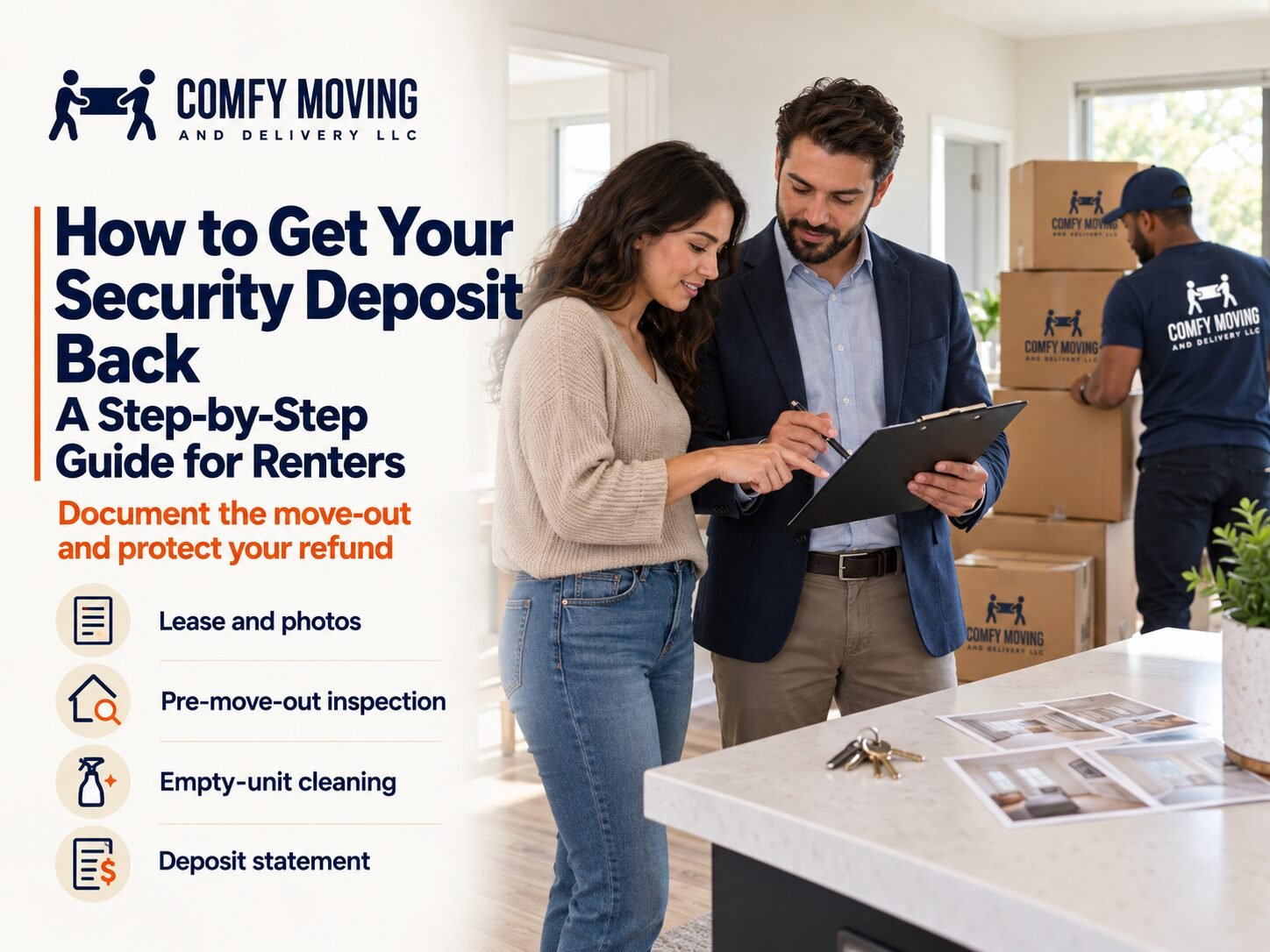
If you are wondering how to get your security deposit back, start before the last box leaves. Keep the lease and move-in photos, ask what the landlord expects at move-out, document the empty unit, and return the keys in a way you can prove. Those steps give you a clear record if a deduction is questioned later.
This guide focuses on California rentals, where Comfy Moving serves customers. Deposit rules in another state may differ. For a California rental, the Department of Real Estate’s tenant guide and the Attorney General’s tenant overview are the sources to check for current rights and procedures.
Start With the Lease and Move-In Record
Find your signed lease, proof of the deposit amount, move-in inspection form, and photos or videos taken when you received the unit. Note any damage or cleaning issue that existed before your tenancy. Put relevant messages with the landlord or property manager in the same folder.
For California tenancies beginning July 1, 2025 or later, the landlord must photograph the unit at or just before the start of the tenancy. Ask for copies of those move-in images so you can compare them with your own record and the condition at move-out.
Read the lease for notice requirements, the expected return date, key and fob return, and any agreed move-out procedure. Do not assume a verbal conversation changed the lease. If an instruction is unclear, ask in writing and save the reply.
In California, a deposit may be used for unpaid rent, cleaning needed to restore the unit to its move-in level of cleanliness, damage beyond ordinary wear and tear, and certain property restoration if the rental agreement permits it. The state guide says a landlord cannot deduct to correct pre-existing defects or ordinary wear and tear. These categories do not guarantee a full refund; the condition of the unit and the facts of a particular tenancy still matter.
Request a Pre-Move-Out Inspection
California tenants may request an initial inspection during the last 14 days of the tenancy. It identifies cleaning or repairs that could lead to deductions while there is still time to address them. The tenant may be present, and the landlord generally gives at least 48 hours’ written notice of the inspection unless that notice is waived in writing. Request it early enough to leave a practical work window afterward. The state guide’s inspection section explains the procedure and exceptions.
Take notes during the walkthrough and ask for the itemized list of conditions the landlord identifies. Compare those conditions with your move-in documentation. A pre-move-out inspection is useful, but it does not eliminate every possible later deduction; issues that arise afterward or were hidden by belongings can still matter.
If a repair requires a professional or may affect plumbing, electrical work, or the property finish, ask management how it should be handled. An improvised repair can leave more damage than the original problem.
Clean to the Move-In Condition
Plan an empty-unit cleaning window after the move. Clean appliances, cabinets, bathroom fixtures, floors, closets, and other areas noted in the lease or inspection. Remove all personal belongings and trash. Photograph the work when it is done.
California’s standard is not an automatic “professionally cleaned” rule for every rental. The state guidance ties a cleaning deduction to the reasonable cost of bringing the unit back to the level of cleanliness it had at move-in, excluding ordinary wear. Compare the unit with your initial photos rather than trying to meet an undefined idea of perfection.
If you pay for cleaning or repairs, keep the invoice and before-and-after pictures. Records help explain what was done, though they do not by themselves decide whether a deduction is valid.
Document the Empty Unit and Return Possession
Once furniture and boxes are gone, make a slow room-by-room video and take clear still photos. Include floors, walls, appliances, windows, fixtures, closets, and any areas discussed during inspection. Capture any damage left during the move as well as completed cleaning. Keep original files with their dates.
Confirm the handover method and return all keys, access cards, remotes, and parking devices. Ask for a dated receipt or written acknowledgment. Give the landlord a forwarding address through the agreed communication channel and keep proof that you sent it. Also arrange mail forwarding and update important senders directly; forwarding alone may not reach every account.
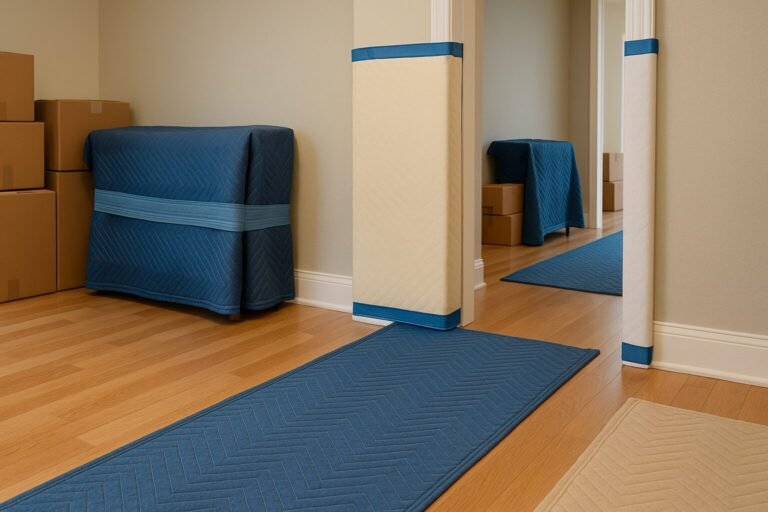
If movers are carrying furniture through shared hallways or an elevator, check those areas before the truck leaves. Building access or damage questions are easier to address while the move is still happening.
Review the Refund or Itemized Statement
Under California guidance, the landlord generally has 21 calendar days after you move out to return the deposit, minus lawful deductions, and provide an itemized statement for amounts kept. The Department of Real Estate guide explains the accounting, documentation, and exceptions for work not yet completed. Mark the date, then keep the envelope, email, or delivery record when the statement arrives.
For repair or cleaning deductions, California rules effective April 1, 2025 require the landlord to photograph the unit after possession is returned and before the work, then again after the work is done. The landlord must provide those photographs with the deposit accounting when deductions are made. Compare them with your move-in and move-out images and the itemized charges.
Compare each deduction with the lease, move-in record, pre-move-out inspection, both sets of final photos, and any invoices you have. Ask for missing photographs, receipts, or clarification in writing if a charge is unclear; the state guide explains limited receipt exceptions and follow-up timing. State the specific item you question and why. Keep a copy of the exchange.
If you cannot resolve a dispute, consult the current state guidance or a qualified local tenant adviser about the appropriate next step. Do not discard photos or correspondence until the matter is settled.
Leave Time Between the Move and Key Return
Schedule loading before the key-return deadline so you have time to photograph and clean the empty apartment. For an Orange County move, send Comfy Moving your building’s access rules, destination, and move-out window when requesting an estimate. Keep the final walkthrough on your calendar after the truck leaves.
Services that match this moving topic